
In haemodialysis, water is not simply an industrial utility — it is a life-sustaining clinical product administered intravenously across a microscopic membrane. For patients undergoing dialysis in India, stringent water purification is the single most critical safeguard between life and severe systemic sepsis.
A chronic kidney disease (CKD) patient undergoing maintenance haemodialysis is exposed to between 120 and 200+ litres of dialysis fluid during every single treatment session. Conducted three times per week, this represents an extraordinary annual fluid exposure of 20,000 to 30,000 litres. This fluid interfaces directly with the patient’s blood across a high-surface-area semi-permeable dialyzer membrane, separated only by a barrier a few microns thick.
Unlike ingested drinking water — which encounters the acidic sterilisation of the stomach, intestinal epithelial filtration, and hepatic first-pass metabolism — water used in haemodialysis enters virtually unchecked into systemic circulation. Any trace of bacterial endotoxins, chemical toxins, chloramines, or toxic metal ions can transfer directly across the membrane, inducing catastrophic clinical sequelae.
With recent national regulatory alerts highlighting endotoxin and particulate non-compliance in imported peritoneal dialysis solutions, hospital biomedical engineers, nephrologists, and healthcare administrators across India face an urgent clinical imperative: enforcing rigorous compliance with the international ISO 23500 series and its harmonized Indian standard IS 17646 through purpose-engineered high-purity water treatment systems.
Direct semi-permeable blood-to-fluid contact per 4-hour clinical haemodialysis session.
ISO 23500-3 & IS 17646 maximum allowable endotoxin limit (Action Level: 0.125 EU/mL).
Standard microbial limit in dialysis water (Action Level commonly set at 50 CFU/mL).
Stringent requirement for online hemodiafiltration (HDF) with TVC < 0.1 CFU/mL.
Why Dialysis Water Quality Directly Governs Patient Survival
In a dialyzer, the patient’s blood and the prepared dialysate flow in opposite directions across thousands of hollow semi-permeable fibers. Solutes transfer between compartments via diffusion and convection. However, this transport mechanism works bidirectionally: contaminants in dialysis water move effortlessly into the patient’s bloodstream.
Among all clinical contaminants, bacterial endotoxins present the most pervasive and dangerous threat. Endotoxins are lipopolysaccharide (LPS) fragments shed from the outer cell wall of Gram-negative bacteria (such as Pseudomonas aeruginosa, Acinetobacter baumannii, Burkholderia cepacia, and Stenotrophomonas maltophilia) commonly found in municipal water distribution and hospital plumbing networks.
The Biological Mathematics of Dialysis Exposure:
A healthy adult drinks approximately 2 to 3 litres of water daily — roughly 1,000 litres per year — buffered by the gastrointestinal tract and liver detox enzymes. In stark contrast, a haemodialysis patient is exposed to over 20,000 to 30,000 litres of fluid annually directly into their bloodstream. At this massive volume, even infinitesimal concentrations of pyrogens produce cumulative toxic damage.
When endotoxins cross the membrane — particularly during high-flux dialysis where hydrostatic pressure gradients induce “back-filtration” from dialysate into blood — they bind to Toll-like receptors (TLR4) on circulating monocytes and macrophages. This interaction triggers massive transcription of pro-inflammatory cytokines, including Interleukin-1 (IL-1), Interleukin-6 (IL-6), and Tumour Necrosis Factor-alpha (TNF-α).
The clinical manifestations are two-fold:
- Acute Pyrogenic Reactions: Characterized by sudden rigors, severe shivering, high spikes in body temperature, acute hypotension, nausea, and in severe instances, circulatory collapse or septic shock during or immediately following treatment.
- Chronic Silent Micro-Inflammation: Sub-pyrogenic endotoxin exposure continuously stimulates low-grade systemic inflammation. This is the primary clinical driver of accelerated cardiovascular atherosclerosis, malnutrition-inflammation-atherosclerosis (MIA) complex, dialysis-related amyloidosis (β2-microglobulin deposition), refractory erythropoietin resistance, and premature mortality in chronic kidney disease.
Core Regulatory Frameworks: ISO 23500 Series and Indian Harmonization (IS 17646)
To standardize international clinical safety, the International Organization for Standardization developed the ISO 23500 series, which specifies the design, equipment validation, fluid preparation, and microbiological testing benchmarks for haemodialysis and related convective therapies:
- ISO 23500-1: General requirements, management systems, and clinical quality responsibilities.
- ISO 23500-2: Water treatment equipment for haemodialysis applications (pre-treatment, RO skids, distribution loops).
- ISO 23500-3: Chemical, microbiological, and endotoxin quality requirements for pure water.
- ISO 23500-4: Concentrates (acidic and bicarbonate formulations) for haemodialysis.
- ISO 23500-5: Final quality of dialysis fluid and substitution fluid for online convective therapies.
In India, the Bureau of Indian Standards (BIS) formulated the IS 17646 series (such as IS 17646 Part 3), aligning national guidelines directly with ISO 23500-3. Compliance with these limits is not merely a clinical recommendation — under National Health Mission (NHM) dialysis guidelines, the Central Drugs Standard Control Organisation (CDSCO) device provisions, and NABH accreditation criteria, adhering to these parameters is a mandatory institutional responsibility.
| Parameter / Contaminant | ISO 23500-3 Standard Dialysis Water | Ultrapure Dialysis Fluid (HDF) | Operational Action Level | Clinical Consequence if Breached |
|---|---|---|---|---|
| Total Viable Microbial Count (TVC) | < 100 CFU/mL | < 0.1 CFU/mL | 50 CFU/mL (Standard) | Bacterial translocation, hospital-acquired bacteremia, sepsis |
| Bacterial Endotoxin (LPS) | < 0.25 EU/mL | < 0.03 EU/mL | 0.125 EU/mL (50% threshold) | Acute pyrogenic fever, chronic MIA syndrome, cardiovascular death |
| Total Chlorine / Chloramines | < 0.10 mg/L | < 0.02 mg/L | 0.05 mg/L | Acute hemolysis, methemoglobinemia, severe hemolytic anemia |
| Aluminium (Al) | < 0.01 mg/L (10 µg/L) | < 0.005 mg/L | 0.005 mg/L | Dialysis encephalopathy (dementia), osteomalacia bone disease |
| Calcium & Magnesium (Hardness) | Ca < 2 mg/L; Mg < 4 mg/L | Non-detectable | Immediate softener regeneration | "Hard Water Syndrome", severe hypercalcemia, vomiting, hypertension |
| Heavy Metals (Lead, Arsenic, Cadmium) | Pb < 0.005; As < 0.005; Cd < 0.001 mg/L | Non-detectable | 50% of maximum limit | Cumulative neurological toxicity, multi-organ damage, anemia |
| Nitrates / Nitrites | Nitrate < 2 mg/L; Nitrite < 0.2 mg/L | < 0.5 mg/L | 1 mg/L Nitrate | Methemoglobinemia, cyanosis, tissue hypoxia |
Standard vs. Ultrapure Dialysis Water: Conventional low-flux dialyzers have smaller pore sizes that somewhat resist bulk endotoxin back-filtration. However, modern nephrology overwhelmingly utilizes high-flux dialyzers and online Haemodiafiltration (online HDF) to optimize middle-molecule clearance. In online HDF, 15 to 30 litres of substitution fluid are infused directly into the patient’s venous blood circuit. Consequently, ultrapure water (< 0.1 CFU/mL TVC and < 0.03 EU/mL endotoxin) is an indispensable clinical mandate.
Chemical Risks: The Historical Caution of Aluminium & Chloramines
While microbiological endotoxins represent the daily operational risk, chemical contaminants carry profound morbidity. Two chemical groups warrant supreme vigilance:
Critical Chemical Vulnerabilities in Clinical Dialysis:
- Aluminium Poisoning (Dialysis Encephalopathy): Historically, dialysis centers using municipal water treated with alum coagulants experienced horrific clusters of “dialysis dementia” (progressive speech impairment, seizures, and death) alongside crippling, vitamin D-resistant fracturing osteomalacia. Aluminium binds irreversibly to serum transferrin and deposits in brain tissue and bone matrix. ISO 23500-3 restricts aluminium to an ultra-trace < 0.01 mg/L (10 ppb).
- Chloramines & Free Chlorine (Acute Hemolysis): Municipal water boards across India routinely dose chlorine and ammonia to create chloramines for residual disinfection. Chloramines cross dialyzer membranes instantaneously, denaturing hemoglobin and oxidizing red blood cell membrane lipids. The resulting massive intravascular hemolysis and methemoglobinemia can trigger fatal acute anemia within minutes of initiating dialysis.
- Fluoride & Heavy Metals: Fluoride accumulation induces agonizing skeletal fluorosis. Heavy metals such as copper (from leaching copper pipes) and zinc induce acute pancreatitis and fatal hepatic necrosis. All metallic piping must be strictly forbidden in dialysate loops.
Recent Quality Concerns in India (2026): Lessons from Supply Chain Failures
The Indian healthcare ecosystem was recently shaken by formal notifications from central drug testing laboratories indicating that multiple batches of imported peritoneal dialysis (PD) solutions failed mandatory endotoxin and particulate limits.
Supply Chain Vulnerability & The Need for Verification:
Drug safety surveillance in 2026 revealed that even imported, pre-packaged clinical fluids from multinational suppliers can breach pyrogen thresholds due to transport temperature excursions, storage degradation, or upstream manufacturer quality slip-ups. Relying blindly on printed Certificates of Analysis (CoA) without facility-level validation invites grave patient-safety disasters.
Equally concerning are the hidden vulnerabilities lurking within hospital internal plumbing. In thousands of healthcare institutions, water systems degrade silently into bacterial reservoirs due to three prevalent engineering defects:
- Dead Legs & Stagnant Pockets: Distribution piping with blind tees, oversized distribution headers, or branches exceeding 3 pipe diameters create laminar stagnation zones where biocidal disinfectants cannot penetrate.
- Unsanitary Piping Materials: Using standard PVC, CPVC with solvent cements, or threaded joints creates microscopic crevices where pioneer bacteria synthesize extracellular polymeric substances (EPS), forming impenetrable bacterial biofilms.
- Infrequent or Unvalidated Disinfection: Performing sporadic chemical sanitisation without monitoring chemical residuals or validating thermal temperatures allows mature biofilms to slough off massive pulses of endotoxins into the dialyzer loop.
Critical Engineering Architecture of a Compliant Dialysis Water System
Meeting ISO 23500-3 and IS 17646 requires an engineered multi-barrier purification train. At Shubham Aqua Vitro, our clinical water systems are architected with zero-tolerance redundancy:
1. Feed Water Assessment & Multi-Media Pre-Filtration
Raw water (municipal mains or deep borewell) is comprehensively characterized for seasonal turbidity swings, silica, iron, manganese, and microbiological load. Dual-media or multimedia depth filtration captures suspended solids down to 10–20 microns, reducing the Silt Density Index (SDI) to < 3 to prevent colloidal fouling of downstream reverse osmosis membranes.
2. Granular Activated Carbon (GAC) Filtration for Chloramines
Chlorine and chloramines must be eliminated before water touches reverse osmosis membranes (which suffer irreversible oxidative polyamide degradation) and dialyzers. A compliant clinical train mandates two GAC vessels in series (Worker and Polisher) with an aggregate Empty Bed Contact Time (EBCT) of not less than 10 minutes (minimum 5 minutes per vessel). Water sampling ports between the two vessels allow operators to detect chloramine breakthrough across the lead bed long before the secondary bed is exhausted.
3. Twin-Alternating Ion Exchange Softeners
Hardness ions (calcium and magnesium) cause severe membrane scaling and catastrophic “hard water syndrome” in patients. Automated twin-alternating resin softeners ensure uninterrupted soft water delivery (hardness < 1 grain/gallon or < 17 mg/L CaCO3) 24/7 without offline regeneration lapses.
4. Dual-Pass Medical Reverse Osmosis (RO) Skids
Reverse osmosis is the primary technological barrier, removing over 99% of dissolved inorganic ions, heavy metals, bacteria, viruses, and pyrogens. For clinical safety, a dual-pass RO configuration — where permeate from the first RO pass serves as feed water for a second high-pressure RO pass — provides essential redundancy. If a membrane fiber suffers micro-rupture in the primary pass, the secondary pass completely insulates the clinical dialyzer loop from contamination.
Explore Shubham’s high-recovery reverse osmosis engineering: Industrial & Medical RO Plants by Shubham India.
5. Sanitary Continuous Recirculation Distribution Loop
Purified water must never sit stagnant. Water must circulate continuously through a closed distribution loop at a minimum return velocity of 1.0 to 1.5 m/s (ensuring turbulent flow with Reynolds number > 4,000) to strip boundary layers and prevent pioneer biofilm colonization.
The distribution pipework must be fabricated strictly from sanitary materials:
- Orbital-Welded SS316L Stainless Steel: Electropolished to internal surface roughness Ra < 0.4 µm with zero threaded fittings.
- Polyvinylidene Fluoride (PVDF) or High-Purity PEX: Welded via infrared (IR) or beadless butt-fusion welding to ensure seamless, crevice-free pipe joints.
- Zero Dead-Leg Design: All take-off valve connections to individual dialysis machines must utilize sanitary zero dead-leg diaphragm valves with a length-to-diameter ratio (L/D) strictly < 3 (ideally < 1.5).
6. Validated Thermal Sanitisation
While chemical disinfection (peracetic acid, ozone, or sodium hypochlorite) has been widely used, it carries chemical residual hazards and requires extensive post-rinse chemical validation tests. State-of-the-art dialysis systems incorporate automated Hot Water Thermal Sanitisation. Heating pure water to 80–85°C and circulating it through the entire distribution loop and machine connectors overnight destroys vegetative bacteria and suppresses biofilm formation without introducing hazardous chemical disinfectants.
7. Point-of-Use Endotoxin Retention Filters (ETRF)
As the ultimate fail-safe, polysulfone or polyethersulfone ultrafiltration cartridges (cut-off 0.02 to 0.05 µm) are mounted directly at the water inlet of each dialysis machine. These filters mechanically capture any endotoxin fragments shed from the distribution loop, guaranteeing ultrapure dialysate delivery at the patient bedside.
Endotoxin Testing Practical Points & Methodologies
Ensuring patient safety requires ongoing, rigorous analytical verification. Hospital biomedical teams must master the nuances of pyrogen detection:
Essential Endotoxin Surveillance Protocols:
- LAL Assay vs. Recombinant Factor C (rFC): The traditional Limulus Amebocyte Lysate (LAL) test (turbidimetric or chromogenic) relies on blood extracts from horseshoe crabs. However, modern ISO revisions accept recombinant Factor C (rFC) fluorometric assays. rFC is completely endotoxin-specific and immune to false-positive activation by (1,3)-β-D-glucans commonly leaching from cellulose filter membranes or dialyzer packaging.
- Bicarbonate Concentrate Matrix Interference: Liquid bicarbonate dialysate concentrate is an ideal growth medium for bacteria. However, high ionic strength and pH can inhibit enzymatic LAL reactions. Validating dilution ratios and spike-recovery tests is essential to avoid false-negative reports.
- Sterile Pyrogen-Free Sampling Technique: Samples must be collected into depyrogenated glass vials or certified pyrogen-free plastic tubes. Sample ports must be disinfected with 70% isopropanol, flamed if metallic, and flushed for a minimum of 2 to 3 minutes under full flow prior to sample capture.
- The 50% Action Level Protocol: Never wait for a test result to exceed the 0.25 EU/mL maximum limit. If endotoxin reaches the 0.125 EU/mL action level (or TVC exceeds 50 CFU/mL), maintenance teams must immediately initiate investigative sanitisation, filter replacements, and loop cultures before patient exposure reaches dangerous thresholds.
Strategic Checklist for Hospital Nephrology & Biomedical Teams
Clinical directors and hospital engineering teams should implement this five-point quality assurance protocol:
Immediate Strategic Dialysis Water Quality Checklist
How Shubham India Delivers Compliance-Ready Clinical Solutions
At Shubham Aqua Vitro Pvt. Ltd. (Shubham India), we engineer and commission turnkey high-purity water treatment infrastructure customized for the stringent demands of tertiary hospitals, multi-specialty healthcare networks, and standalone nephrology centers:
- Turnkey Medical Reverse Osmosis Systems: Dual-pass RO skids equipped with sanitary SS316L high-pressure piping, hygienic sample valves, and high-efficiency sanitary centrifugal pumps.
- Automated Thermal Sanitisation Skids: Integrated hot-water generators and automated PLC routines that sanitize the entire distribution loop during off-hours, eliminating toxic chemical handling.
- Sanitary Loop Fabrication: Orbital-welded electropolished SS316L and IR-butt-welded PVDF piping loops engineered with zero dead-leg diaphragm valves complying with ISO 23500-2.
- Comprehensive Healthcare Facility Integration: Seamlessly integrating pure water supply across hemodialysis suites, Central Sterile Supply Departments (CSSD), endoscopy washing suites, and clinical pathology laboratories.
Learn more about our water engineering solutions: Reverse Osmosis Plants by Shubham India and our dedicated Pharma & Life Sciences Water Solutions.
Conclusion
Dialysis water is a pharmaceutical product, and its chemical and microbiological purity directly governs patient morbidity and survival. Compliance with ISO 23500 / IS 17646 standards — especially maintaining bacterial endotoxin levels strictly below 0.25 EU/mL (and < 0.03 EU/mL for online HDF) — is the fundamental benchmark of patient-centered nephrology care.
Recent quality concerns in India demonstrate that healthcare institutions cannot take pure water for granted. By investing in robust dual-pass reverse osmosis architecture, sanitary dead-leg-free distribution loops, automated thermal sanitisation, and rigorous laboratory surveillance, hospital leaders can eliminate clinical pyrogenic hazards and deliver the highest standard of compassionate, life-saving care.
Scientific Disclaimers & Regulatory References
This clinical engineering publication is prepared for biomedical engineers, nephrologists, and hospital administration teams for educational and technical informational purposes. Content references published standards including ISO 23500-1/2/3/4/5:2024 (Preparation and quality management of fluids for haemodialysis and related therapies), Bureau of Indian Standards IS 17646:2021, Central Drugs Standard Control Organisation (CDSCO) guidelines, and clinical literature on endotoxin-mediated micro-inflammation. It does not replace the complete text of applicable standards or statutory institutional protocols.
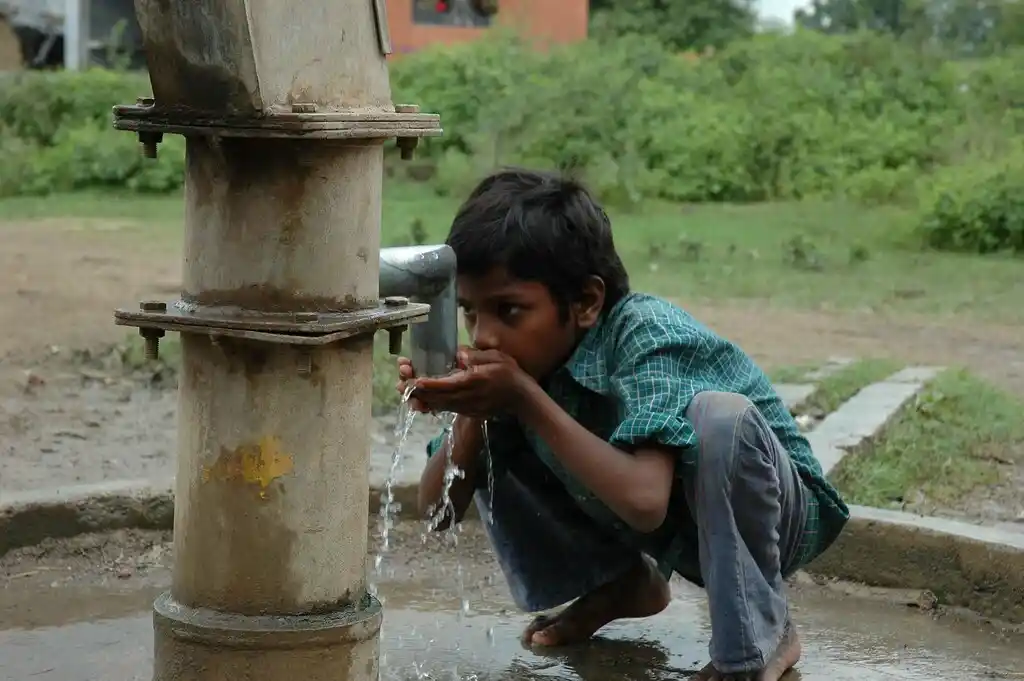
Photo Credit: Anil Gulati
Related Technical Solutions & Guides:
• Reverse Osmosis (RO) Plants
• Demineralization (DM) & Mixed Bed Plants
• Activated Carbon Filters (Chloramine Removal)
• Healthcare, Pharma & Life Sciences Solutions
• Operation & Maintenance (O&M) Services