
India treats less than a third of the wastewater it generates every day. That gap is not just an environmental problem — it is an operational risk, a regulatory liability, and increasingly, a reputational one.
For industries, municipalities, and housing projects looking to close that gap, the choice of a wastewater treatment plant manufacturer is one of the most consequential decisions you will make.
This guide cuts through the noise. No generic overviews. No recycled comparisons. Just the specific things that separate a manufacturer who delivers long-term performance from one who hands you a plant and disappears.
Why This Decision Carries More Weight Than It Used To
Five years ago, installing a wastewater treatment plant was primarily a compliance exercise. You needed an environmental clearance, you ticked the box, and you moved on.
That calculus has fundamentally shifted. The Central Pollution Control Board’s 2024 reclassification of several industrial sub-sectors under the “red category” immediately imposed Zero Liquid Discharge (ZLD) obligations on industries that had not previously faced them. Simultaneously, State Pollution Control Boards across Gujarat, Maharashtra, Tamil Nadu, and Telangana have tightened effluent discharge standards with more frequent inspections and harsher penalties.
Beyond regulation, freshwater scarcity is becoming a direct supply chain risk. Industries in water-stressed basins, particularly textiles in Surat, pharmaceuticals in Hyderabad, and food processing units across Punjab — are now treating wastewater reuse not as a bonus but as a business continuity strategy.
Add to this the scale of government investment: the IMARC Group, India’s wastewater treatment plant market was valued at USD 4.33 billion in 2024 and is projected to reach USD 7.35 billion by 2033.
A separate analysis by TechSci Research pegged 2024 at USD 1.33 billion with a faster growth trajectory of 10.6% CAGR through 2030. The variance in estimates matters less than the direction.
This sector is growing rapidly, and the manufacturers who can meet genuine demand are a much smaller group than the ones advertising capacity.
Understanding the Three Core Plant Types
Before evaluating manufacturers, it helps to be clear on what type of plant your project actually requires, because the engineering behind each is substantially different.
Sewage Treatment Plants (STP)
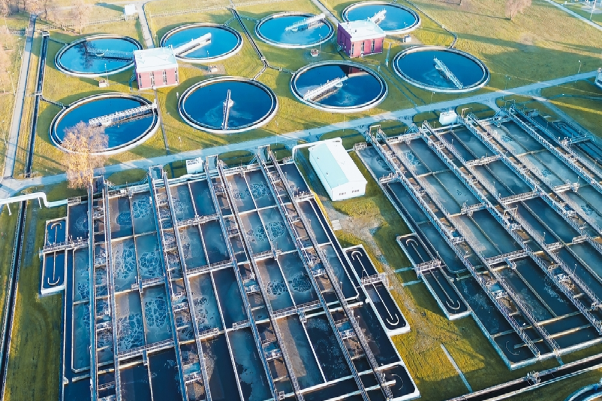
Sewage Treatment Plants (STP) are designed for domestic and municipal wastewater. The pollutants are relatively predictable: organic matter, suspended solids, nutrients, and pathogens. STPs are commonly required by residential societies under 10,000 sqm, by hotels and hospitals, and by urban local bodies under AMRUT guidelines.
Effluent Treatment Plants (ETP)
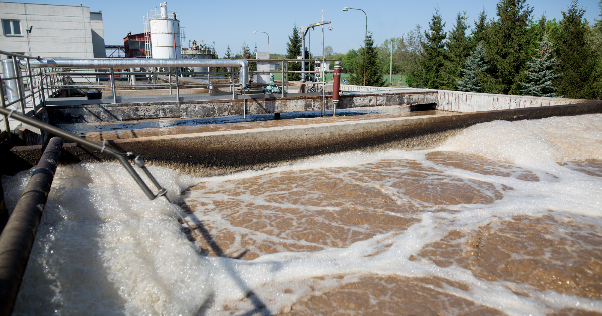
Effluent Treatment Plants (ETP) handle industrial discharge, which is a different problem entirely. The specific pollutants depend on the industry: heavy metals in electroplating, phenols and cyanides in refineries, pharmaceutical intermediates in API manufacturing, and reactive dyes in textiles. An ETP for a distillery looks almost nothing like an ETP for a dairy. This is why sector-specific experience matters so much in a manufacturer.
Zero Liquid Discharge (ZLD) Systems
Zero Liquid Discharge (ZLD) Systems represent the most demanding end of the spectrum. These systems ensure that no liquid effluent leaves the facility, all water is recovered for internal reuse, and what remains is a dry solid waste.
ZLD is now mandatory for industries in the red category, including wet-process textile units, distilleries, tanneries, sugar mills, and pulp and paper manufacturers. The engineering required to achieve ZLD is considerably more complex, and the capital and operating costs are significantly higher than conventional plants.
Knowing which category you fall into, and whether ZLD compliance applies to you, is the starting point for every other decision.
The Six Technologies Behind Modern Wastewater Treatment Plants
Technology selection is where cost, performance, and footprint trade-offs play out. A manufacturer worth working with will recommend technology based on your specific wastewater characteristics, not based on what they happen to manufacture.
MBBR — Moving Bed Biofilm Reactor
In MBBR, microorganisms grow on small plastic carrier media that move freely through the treatment tank. This gives MBBR systems a high biological density in a compact footprint, making them well-suited to residential societies, hotels, commercial complexes, and mid-size industries. MBBR has become one of the most widely installed STP technologies in India precisely because it balances cost, space efficiency, and ease of operation.
MBR — Membrane Bioreactor
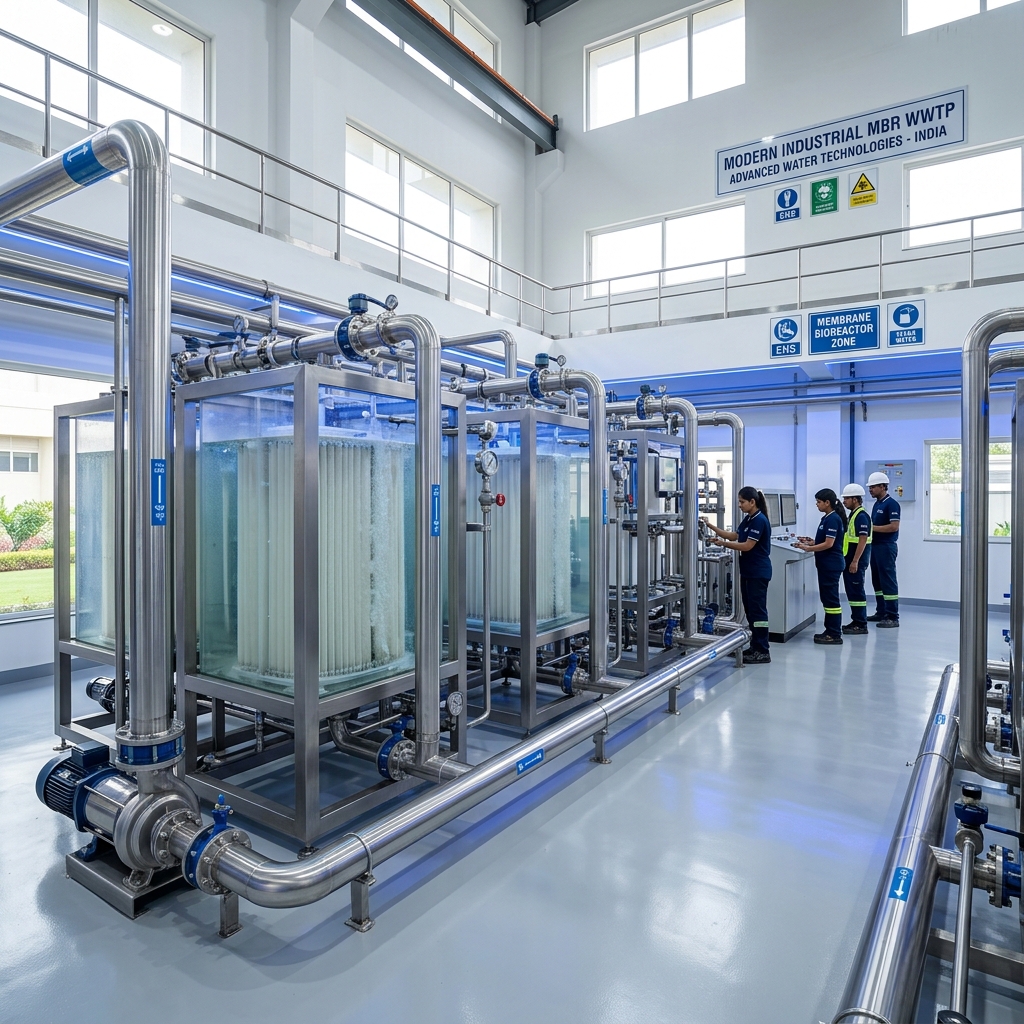
MBR integrates biological treatment with membrane filtration in a single unit, producing treated water of significantly higher quality than MBBR or conventional systems. The output is typically suitable for direct reuse in cooling towers, toilet flushing, horticulture, or even some process applications — depending on the tertiary treatment configuration. MBR is preferred where treated water quality and reuse are the primary goals, and where the higher capital cost is justified by reduced freshwater procurement.
SBR — Sequential Batch Reactor
SBR operates in timed cycles, using a single tank to carry out aeration, settling, and decanting in sequence. This makes it adaptable to variable flow rates, which is an advantage for industrial facilities where wastewater generation fluctuates across shifts. It is also a well-understood technology with a long operational history in Indian municipal and industrial projects.
ZLD Systems
ZLD is a process, not a single technology — it typically combines multiple stages: biological treatment, chemical precipitation, multi-effect evaporation (MEE), and agitated thin-film drying (ATFD). The final output is a dry cake of total dissolved solids. System design varies significantly depending on the inlet TDS, the volume to be treated, and the quality of recovered water required. ZLD is capital-intensive, energy-intensive, and highly sensitive to design quality — which is why the manufacturer’s track record with actual ZLD installations matters more here than anywhere else.
Civil STP
Large-scale municipal treatment plants are still predominantly built using civil construction techniques, reinforced concrete tanks sized for high daily volumes, typically above 5 MLD. These projects require a different set of capabilities: project management over longer construction timelines, coordination with civil contractors, and familiarity with the technical specification requirements of government executing agencies.
Reverse Osmosis and Advanced Tertiary Systems
RO, UV disinfection, ultrafiltration, and demineralisation (DM) systems are deployed at the tertiary stage to polish treated water to specific output quality targets. They are also core components in ZLD system design. A manufacturer with integrated capability across biological treatment and advanced separation technologies is better positioned to design systems where these stages need to work together.
What Actually Separates Strong Manufacturers from Average Ones
India has no shortage of companies that will manufacture and supply a wastewater treatment plant. The difference between a good project outcome and a problematic one often becomes visible only after commissioning, when the plant fails to meet discharge norms under peak load, when the manufacturer’s after-sales team is unreachable, or when the plant’s energy consumption far exceeds what was projected.
Here is what to evaluate before you commit:
- Sector-specific installation history: The wastewater from a pharmaceutical API manufacturer is chemically complex in ways that a residential STP supplier may not be equipped to handle. Ask for references from projects in your specific industry, not just a general portfolio.
- Technology breadth: A manufacturer that builds only MBBR systems will tend to recommend MBBR systems, not because it is always the right answer, but because it is the only answer they have. Look for manufacturers who can evaluate and design across MBBR, MBR, SBR, ZLD, and civil-scale plants, and who can articulate why one technology is more appropriate than another for your specific application.
- In-house engineering and design capability: The quality of the initial process design determines everything: plant performance, regulatory compliance, energy efficiency, and ease of maintenance. Ask whether the manufacturer employs process engineers in-house or outsources design work. In-house capability means accountability. Outsourced design means the manufacturer may not fully understand the plant they are selling you.
- Operation and Maintenance (O&M) services: A plant that is not maintained to its design parameters will underperform within months. Many manufacturers now offer dedicated O&M contracts, and for organisations without in-house water treatment expertise, these contracts are worth taking seriously. The quality of a manufacturer’s O&M team is a proxy for the quality of their engineering.
- Regulatory familiarity: CPCB standards are national, but State Pollution Control Board standards and enforcement practices vary considerably. A manufacturer with active projects in your state will be familiar with local discharge norms, consent conditions, and inspection requirements — and that familiarity saves time and cost during commissioning.
- Post-commissioning performance data: Ask manufacturers for treated water quality data from existing installations: BOD, COD, TSS, and whatever parameters are relevant to your discharge consent. A manufacturer confident in their plant performance will share this data readily.
A Note on Total Cost of Ownership
Capital cost is the most visible number in any procurement process. It is also one of the least reliable indicators of project value over a plant’s operational life.
A well-designed wastewater treatment plant operates for 15 to 25 years. Over that period, operating costs, energy consumption, chemical dosing, membrane replacement, sludge handling, and workforce — dwarf the initial capital expenditure. A plant purchased at a 15% discount that consumes 20% more energy per kilolitre treated, or requires membrane replacement every two years instead of five, will cost significantly more over its lifetime.
When evaluating proposals, ask manufacturers to provide projected operating costs per kilolitre treated at full load. Ask specifically about energy consumption per stage, chemical dosing quantities, and membrane or media replacement cycles. These numbers are not always volunteered, but they are the ones that matter most over time.
About Shubham Aqua Vitro Pvt. Ltd.
Shubham Aqua Vitro Pvt. Ltd. is an Ahmedabad-based water and wastewater treatment specialist with over 20 years of active project experience across industrial, municipal, and commercial sectors. With more than 2,000 installations completed across India and over 500 million litres of water reused daily through their systems, the company brings a scale of operational experience that is directly relevant when evaluating long-term plant performance.
Our technology range covers Sewage Treatment Plants across all major configurations (Civil STP, MBBR, MBR, and SBR), Effluent Treatment Plants for sector-specific industrial applications, Zero Liquid Discharge systems, Grey Water Treatment, and Water Treatment Plants including RO, DM, and softening systems. Dedicated Operation and Maintenance services are also available for organisations seeking performance assurance over time.
Clients served include Reliance Industries, NTPC, Vedanta, Adani, JSW, L&T Energy, and Cadila Pharmaceuticals, among others — a reference base that spans heavy industry, energy, and life sciences.