350 KLD Effluent Treatment Plant for Food Processing: Hyfun Foods, Mehsana
Hyfun Foods, a leading producer of frozen French fries and potato specialties, needed a robust wastewater treatment system to support water reuse and sustainable operations. As an experienced turnkey ETP plant manufacturer in Mehsana and North Gujarat, Shubham Aqua Vitro designed and commissioned an advanced 350 KLD effluent treatment system. Engineered specifically for complex food processing effluent, the installation reliably neutralizes high organic loads, protects downstream equipment, and enables high-recovery water recycling.
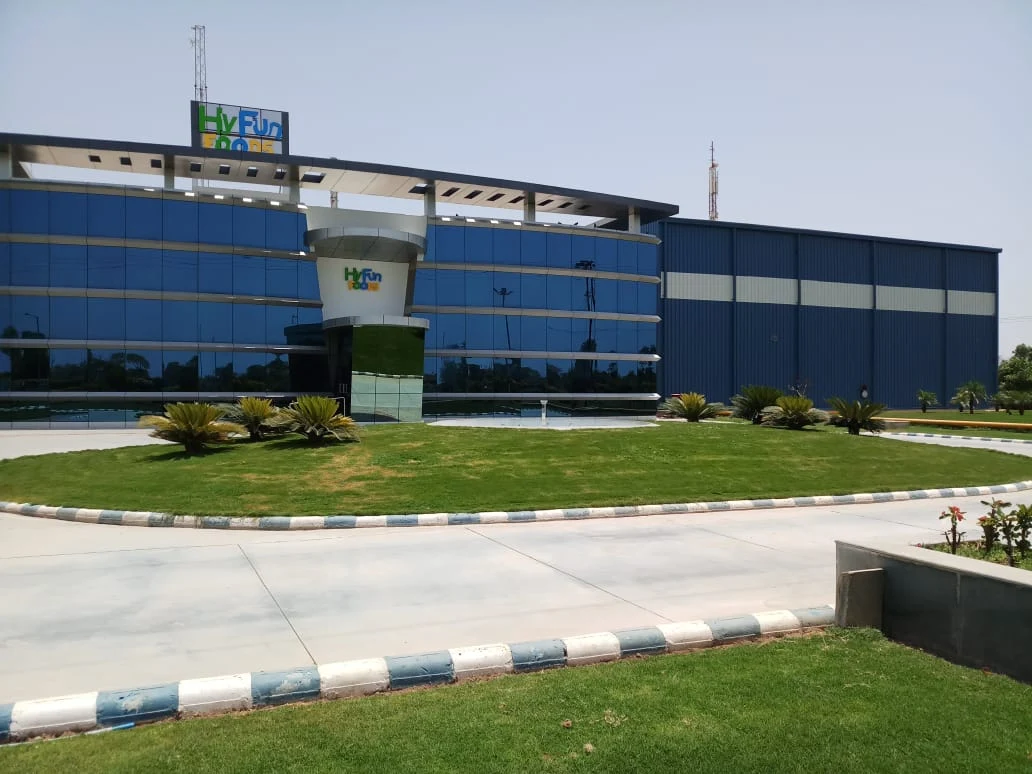
Food Processing Wastewater Challenges at Hyfun Foods
High COD Concentration
Wastewater contained COD levels as high as 10,000 mg/L, requiring specialized anaerobic treatment (IC Reactor) and biological polishing processes to reduce organic load efficiently.
Oil & Grease Contamination
Food processing operations generated significant oil and grease that could coat membranes and inhibit downstream biological systems if not efficiently separated during primary treatment.
Variable pH Conditions
Fluctuating wastewater characteristics required robust equalization, continuous pH management, and process stability to protect biological cultures and ensure stable plant operations.
Water Reuse & Circularity
The client needed high-quality treated water suitable for reuse within manufacturing operations. Shubham implemented Zero Liquid Discharge (ZLD) using ultrafiltration and reverse osmosis to achieve this.
Strict Treated Water Quality
Food manufacturing demands high-purity water with zero quality variations. Our system was designed with dual-stage membrane filtration to meet strict reusable process water specifications reliably.
Why Treat Food Processing Wastewater Differently?
Industrial food processing wastewater from potato processing, frozen foods, and agro-manufacturing presents unique biological and mechanical treatment challenges. Unlike standard municipal sewage, food plant effluent carries extreme concentrations of soluble starches, sugars, and organic matter that drive COD levels up to 10,000 mg/L. Unemulsified oil and grease from frying lines present severe fouling risks for downstream microfiltration and reverse osmosis membranes if not eliminated at the primary stage. Furthermore, wide pH swings and seasonal production cycles can destabilize conventional aerobic systems. Sizing an Internal Circulation (IC) anaerobic reactor prior to aerobic polishing efficiently degrades heavy organic loads while generating useful biogas. Following anaerobic and biological treatment with advanced ultrafiltration (UF) plants and industrial RO plants creates a multi-barrier defense that prevents membrane fouling and consistently yields high-purity process water.
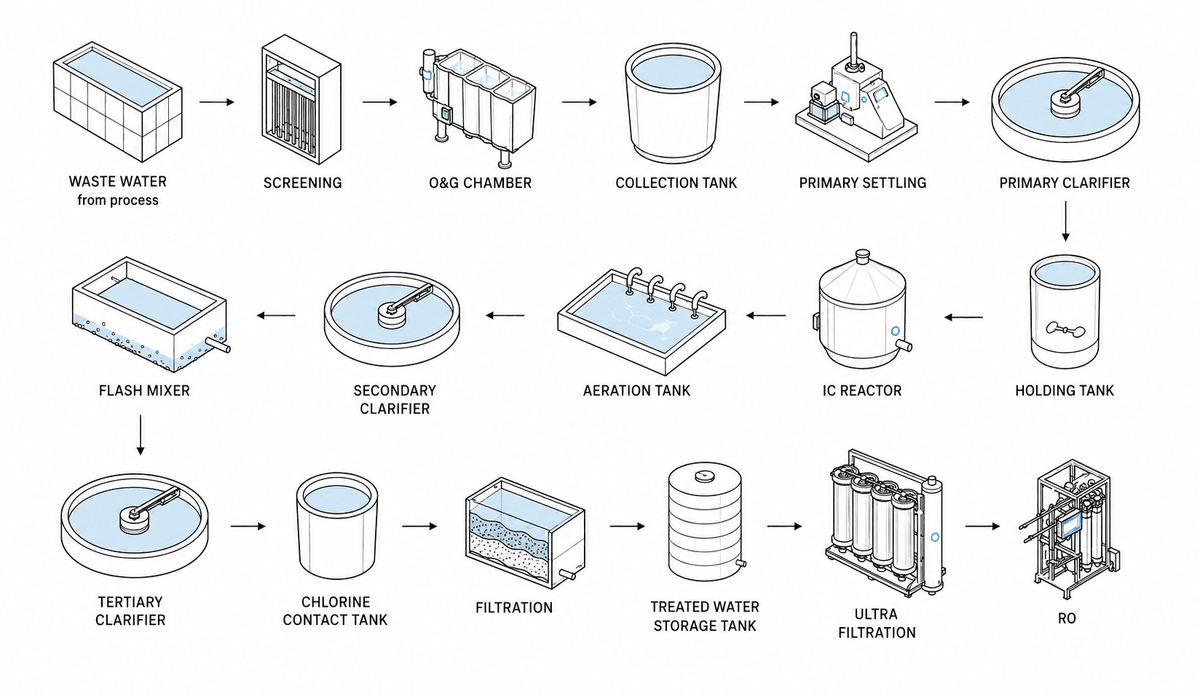
Process Flow Diagram
ETP Process Design: Primary, Secondary and Tertiary Treatment
Shubham designed a customized treatment solution combining physicochemical, biological, and advanced membrane technologies.
Primary Treatment
Components: Screening, Oil & Grease Removal System, Collection Tank
Purpose: Remove floating impurities, separate oil and grease, equalize fluctuating hydraulic loads
Secondary Treatment
Components: Chemical Dosing, pH Adjustment, Holding Tank, IC Reactor, Aeration System, Secondary Clarifier, Flash Mixing Tank, Filter Press
Purpose: Reduce high organic load, lower COD concentrations, remove suspended solids, stabilize treatment process
Tertiary Treatment
Components: Filtration System, Treated Water Storage Tank, Ultrafiltration (UF), Reverse Osmosis (RO)
Purpose: Remove residual turbidity and odor, produce high-quality reusable water, support Zero Liquid Discharge objectives
Technologies Used in This ETP
Key mechanical, biological, and membrane technologies integrated into this 350 KLD turnkey installation:
IC Reactor (Internal Circulation)
The high-rate anaerobic IC reactor digests high-strength soluble COD at high loading rates using granular biomass. Internal gas-lift circulation ensures thorough biological mixing and gas-liquid-solids separation without requiring continuous mechanical power.
Ultrafiltration (UF)
Our pressurized ultrafiltration (UF) plants provide sub-micron barrier filtration downstream of clarifiers, eliminating suspended solids, fine colloidal matter, and bacteria. This critical stage delivers low-SDI feedwater that protects downstream reverse osmosis membranes from particulate fouling.
Reverse Osmosis (RO)
Multi-stage industrial RO plants separate dissolved salts, residual organic traces, and minerals under high pressure. The treated permeate satisfies rigorous purity criteria, enabling up to 300 m³/day of direct process water recycling across facility utilities.
Oil & Grease Removal
The primary physicochemical stage captures free-floating oils, potato skins, and greases before biological treatment. Rapid mechanical separation in an engineered effluent treatment plant (ETP) prevents oil coating on biomass and membrane elements.
ETP Performance: Inlet vs Outlet Water Quality
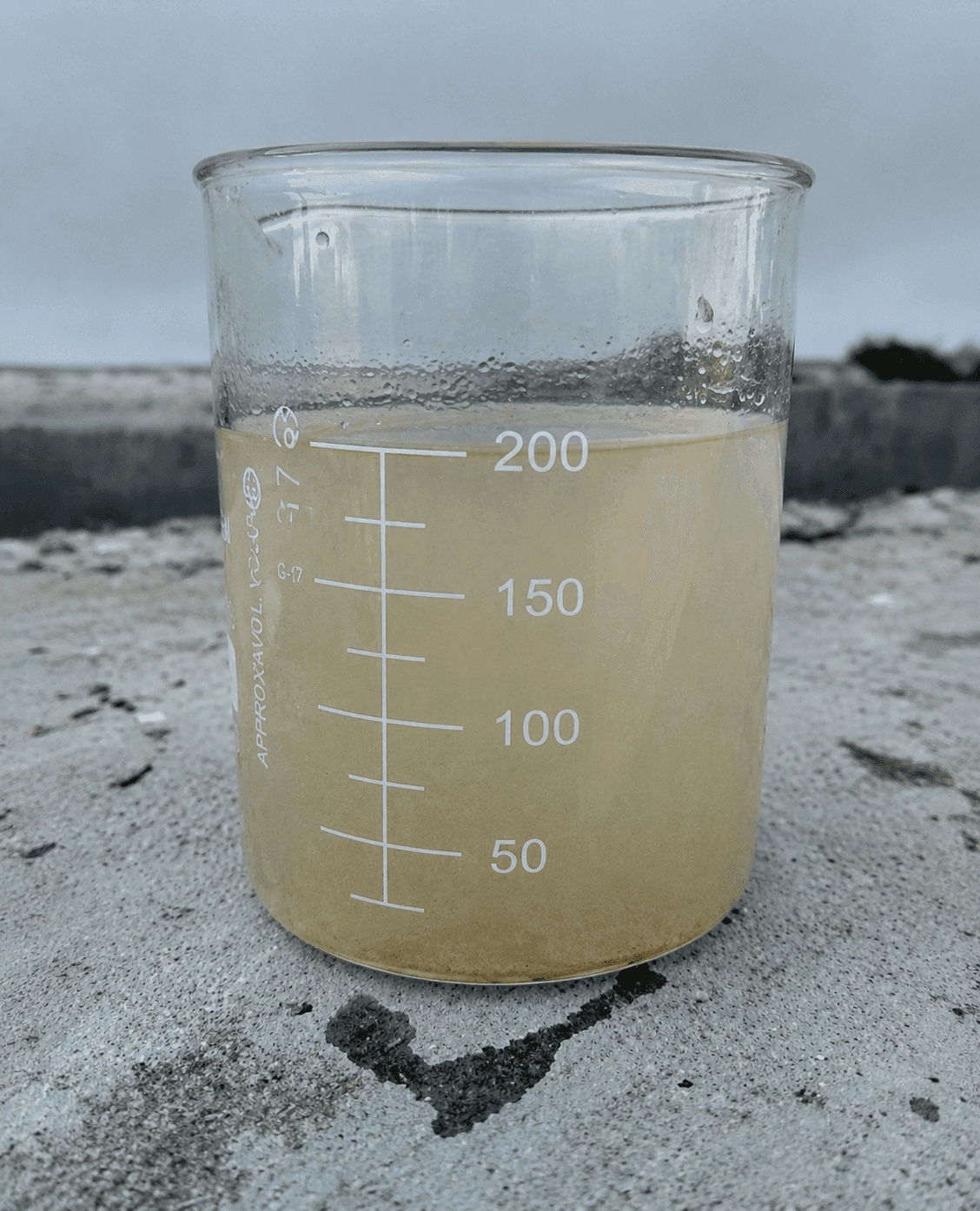 ETP INLET
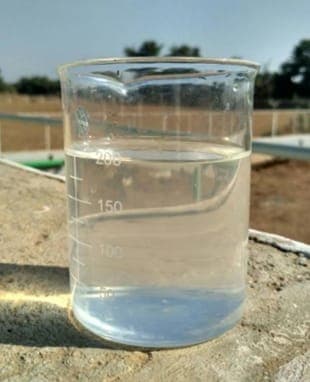 ETP OUTLET
| Parameter | Inlet Value | Outlet Value |
| pH | 4.5–8.5 | 6.8 |
| BOD | 300–350 mg/L | 20 mg/L |
| COD | 7000–10000 mg/L | 39 mg/L |
| TSS | 150–250 mg/L | 7 mg/L |
| Oil & Grease | 15 mg/L | NIL |
Performance Highlights
Up to 99.6%
COD Reduction
Up to 94%
BOD Reduction
Near-Zero
Oil & Grease
300 m³/day
Water Reuse Capacity
What Affects the Cost of an ETP Plant?
The capital expenditure (CapEx) and operational cost (OpEx) of an industrial effluent treatment plant depend on several site-specific engineering variables. Daily hydraulic capacity (measured in KLD) and the incoming pollution profile—specifically peak COD, BOD, and oil concentrations—determine tank sizing and whether high-rate anaerobic pre-treatment like an IC reactor is necessary. Stringent treated water objectives, such as single-stage discharge versus multi-stage membrane recycling or comprehensive zero liquid discharge (ZLD) systems, substantially influence tertiary equipment specifications. Additional factors include available plant footprint, materials of construction (such as epoxy-lined civil basins or stainless steel skids), and the degree of PLC/SCADA automation. For an accurate, site-specific estimate tailored to your facility, contact our wastewater engineering team.
Water Reuse and Sustainability Impact
By implementing advanced treatment technologies and water reuse infrastructure, the project contributes to:
Reduced freshwater consumption
Circular water management
Lower environmental discharge
Improved ESG performance
Water-secure manufacturing operations
Frequently Asked Questions
What is an ETP plant and why do food processing units need one?
An Effluent Treatment Plant (ETP) is an industrial wastewater treatment facility engineered to purify trade effluent before discharge or reuse. Food processing units generate wastewater laden with starch, sugars, suspended potato solids, and high chemical oxygen demand (COD). Without an ETP, this wastewater rapidly depletes dissolved oxygen in receiving environments. An ETP removes suspended solids, separates oils, and stabilizes organic loads to ensure environmental regulatory compliance and enable factory water recycling.
How does an IC reactor reduce high COD in food wastewater?
An Internal Circulation (IC) reactor is a high-rate anaerobic bioreactor designed for streams with high organic concentrations. Inside the reactor, dense anaerobic granular sludge digests soluble organic contaminants into biogas. The resulting biogas creates internal gas-lift circulation that continuously mixes incoming effluent with biomass without external pumps. This multi-stage anaerobic digestion achieves exceptional COD degradation rates even under high hydraulic loading rates and variable organic spikes.
Can treated ETP water be reused in food manufacturing?
Yes, when treated through multi-barrier tertiary membranes such as Ultrafiltration (UF) and Reverse Osmosis (RO). At Hyfun Foods, tertiary membrane filtration lowers COD to 39 mg/L, TSS to 7 mg/L, and eliminates oil and grease completely. The high-purity permeate water meets rigorous manufacturing specifications, enabling 300 m3/day of recycled process water for utilities, cooling towers, and facility operations without compromising manufacturing hygiene.
What is the difference between ETP and ZLD?
An Effluent Treatment Plant (ETP) treats raw industrial wastewater to meet statutory discharge standards or secondary utility reuse levels. A Zero Liquid Discharge (ZLD) system takes treatment further by integrating advanced membrane recovery and thermal brine concentration stages to eliminate all liquid waste. In a ZLD scheme, virtually 100% of liquid water is purified and recycled back into industrial processes, leaving only dry solid salts for disposal.
Does Shubham provide ETP plants in Mehsana and across Gujarat?
Yes. Shubham Aqua Vitro Pvt. Ltd. provides complete turnkey engineering, procurement, construction (EPC), and operation & maintenance (O&M) services for ETP and ZLD plants across Mehsana and all Gujarat industrial corridors. From food processing and agro-industries in North Gujarat to chemical and pharmaceutical manufacturing across Ahmedabad, Sanand, and Dahej, Shubham delivers custom-engineered industrial wastewater solutions.
Related Solutions and Projects
Wastewater & Recycling Systems
Featured EPC Projects
-
Zydus Hospital, Ahmedabad
300 KLD healthcare wastewater treatment plant enabling safe pathogen removal and non-potable reuse.
-
Kalpvan Township, Rajkot
200 KLD greywater recycling system reducing municipal freshwater consumption for residential landscaping.